Amor Fati
The Latin phrase "love of fate" — embracing everything that happens, including suffering, not merely tolerating it.
What does amor fati mean?
Though the Stoics practised acceptance of fate, Nietzsche sharpened it into amor fati: not resignation but active love of one's life exactly as it is, "not merely to bear what is necessary... but to love it." Paired with eternal recurrence, it becomes a test of affirmation — would you will this moment to return forever? To live by amor fati is to stop dividing experience into the welcome and the unwelcome, and to treat even loss as part of a life one would choose again.
Not merely to bear what is necessary but to love it — every loss part of a life you'd choose again.
How does amor fati apply today?
- A reframing practice for setbacks: ask what the obstacle makes possible
- A bridge between Stoic acceptance and a more affirmative, creative stance
- A daily discipline of saying "yes" to the given rather than the wished-for
The deeper point
Amor fati is the hardest idea in philosophy to fake. You can perform acceptance, but loving your fate — including the parts that hurt — can’t be willed directly. It’s the by-product of a life you would actually choose again, not a mantra you repeat.
Thinkers who hold this idea
Schools that hold this idea
Quotes on this idea
- “You have power over your mind — not outside events. Realize this, and you will find strength.” — Marcus Aurelius
- “He who has a why to live for can bear almost any how.” — Friedrich Nietzsche
- “Waste no more time arguing about what a good man should be. Be one.” — Marcus Aurelius
- “That which does not kill us makes us stronger.” — Friedrich Nietzsche
Compared in
Related ideas
Frequently asked
- What does amor fati mean?
- "Love of fate" — the ideal of embracing everything that happens, including suffering, not merely tolerating it but affirming it as necessary to one’s life. Nietzsche pushed the Stoic idea into active love.
- Who came up with amor fati?
- Nietzsche made the phrase famous in The Gay Science and Ecce Homo, but the attitude descends from Stoics like Epictetus and Marcus Aurelius, who urged accepting what is not in our control.
- How do you practise amor fati?
- By reframing setbacks as material rather than misfortune — asking not "why me?" but "what does this make possible?" It is active affirmation, not passive resignation.
Keep reading
Leverage
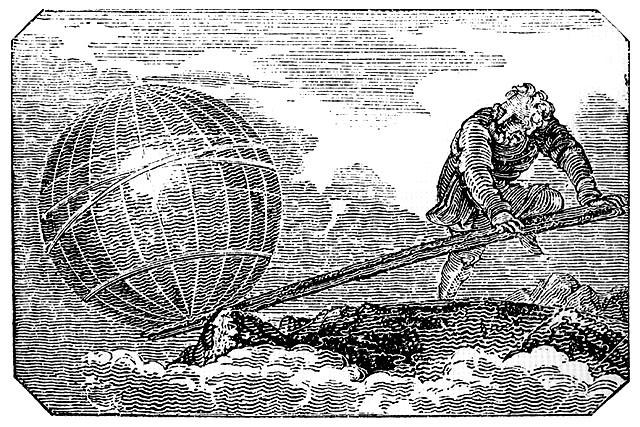
One carpenter earns per table; another writes the book and sells the same work thousands of times.
Go deeper
The book behind this idea: Thus Spoke Zarathustra by Friedrich Nietzsche. Hear the whole thing free — start an Audible trial and your first audiobook is on the house.
Read the full summary of Thus Spoke Zarathustra →
More canonical picks:
- Thinking, Fast and Slow — Daniel Kahneman
- The Art of Thinking Clearly — Rolf Dobelli
- The Great Mental Models, Volume 1 — Shane Parrish
- Poor Charlie’s Almanack — Charlie Munger
- Super Thinking — Gabriel Weinberg & Lauren McCann
- Seeking Wisdom — Peter Bevelin
As an Amazon Associate, ReadGlobe earns from qualifying purchases and Audible trials — at no extra cost to you.
Cite this page
ReadGlobe. Amor Fati. https://readglobe.com/idea/amor-fati/
"Amor Fati." ReadGlobe, readglobe.com/idea/amor-fati/.
Primary source: Wikipedia
Summary based on Nietzsche's Ecce Homo and The Gay Science (public domain).