The Overton window
The Overton window is the range of ideas the public currently finds acceptable to discuss and enact. Policies inside it are politically viable; those outside seem radical or unthinkable — until the window shifts.
- 1 min read
- 6 linked ideas
How does the Overton window work?
Ideas migrate along a spectrum — unthinkable, radical, acceptable, sensible, popular, policy. The window moves not by winning the centre argument but by sustained advocacy at the edges, which drags the whole acceptable range toward it.
Ideas outside the window seem unthinkable — until the window shifts.
How do you use the Overton window?
- Reading social change: track how a once-fringe position becomes mainstream over years.
- Advocacy strategy: stake out a bolder position than you expect to win, to shift where the “reasonable middle” sits.
- Spotting manipulation: notice when shock proposals are floated mainly to move the window, not to pass.
What does the Overton window look like in practice?
Same-sex marriage in the United States: in the early 1990s no state allowed it and few national politicians would argue for it. Years of advocacy, court cases and changing public opinion moved it through “radical” and “acceptable” into “popular”, and in 2015 the Supreme Court made it law nationwide (Obergefell v. Hodges). Politicians followed the window; they did not open it.
Where does the Overton window fail?
It’s descriptive, not normative — the window moving tells you an idea became acceptable, not that it’s good or true. And the same mechanism can be used deliberately to normalise harmful ideas.
- There is no single window — acceptability varies sharply across regions, generations, and subcultures, so one audience's mainstream is another's fringe.
- The window is mostly visible in hindsight; measuring its edges in real time is guesswork dressed as analysis.
- Shifts are reversible — an idea normalised over a decade can snap back to unthinkable after one salient event.
The counter-model: First-principles thinking — The window tracks what is acceptable; first principles evaluates what is true or sound — judging an idea needs the second, not the first.
How do you apply the Overton window, step by step?
- Identify the policy or idea you want to advance or assess.
- Map where it currently sits: unthinkable, radical, acceptable, sensible, popular, or policy.
- List which recent events or voices moved nearby ideas inward or outward.
- Separate the question 'is it acceptable?' from 'is it good?' and answer both.
- Decide whether to argue the idea directly or first shift the surrounding conversation.
Frequently asked
- What is the Overton window?
- The range of policies and ideas considered politically acceptable to the mainstream at a given time. Ideas outside it seem radical or unthinkable.
- What does the Overton window mean in simple terms?
- It is the set of ideas a politician can support today without seeming extreme. Anything inside the window can be said and voted for; anything outside it sounds radical or unthinkable — for now.
- Who created the Overton window concept?
- Joseph P. Overton, a senior vice president at the Mackinac Center for Public Policy, developed it in the mid-1990s. After his death in 2003 his colleague Joseph Lehman developed the idea further and named it after him.
- What are the six stages of the Overton window?
- A common scale, proposed by the commentator Joshua Treviño, runs: unthinkable, radical, acceptable, sensible, popular, policy. An idea moves the window as it climbs that ladder in public opinion.
- Do politicians move the Overton window?
- Mostly not. Lehman’s point was that lawmakers usually act inside the window; it is shifted first by public argument, advocates, events and culture, and politicians then follow where it has moved.
- How does the Overton window shift?
- Through sustained advocacy at the edges of acceptability, which gradually drags the range of “reasonable” opinion toward a previously fringe position.
Related
Keep reading
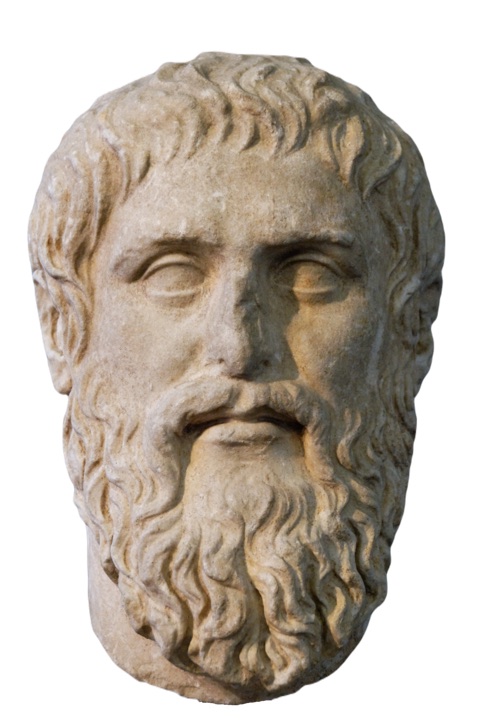
Plato
Almost every later debate about reality, justice, or beauty begins as a footnote to him.
The books behind better thinking
Affiliate links. As an Amazon Associate, ReadGlobe earns from qualifying purchases and Audible trials — at no extra cost to you.
Listen to any of these free. Start a free Audible trial and get your first audiobook on the house.
Prefer to read? The canonical picks:
- Thinking, Fast and Slow — Daniel Kahneman
- The Art of Thinking Clearly — Rolf Dobelli
- The Great Mental Models, Volume 1 — Shane Parrish
- Poor Charlie’s Almanack — Charlie Munger
- Super Thinking — Gabriel Weinberg & Lauren McCann
- Seeking Wisdom — Peter Bevelin
Cite this page
ReadGlobe. (2026). The Overton window. https://readglobe.com/model/overton-window/
"The Overton window." ReadGlobe, 24 Oct. 2026, readglobe.com/model/overton-window/.
Primary source: Wikipedia
Editorial synthesis © ReadGlobe 2026, drawing on the mental-models tradition (Charlie Munger, Farnam Street) and the primary sources for each model. · Last reviewed 2026-10-24.